The Strange Japanese Ritual From Nagano That Researchers Say May Help Fire Up Your Body’s Fat-Burning Process — Without Dieting or Extreme Workouts
IMPORTANT HEALTH UPDATE May take up to 10 seconds to load.
Make sure your sound is on
You’ve probably tried cutting carbs, fasting, counting calories, hitting the gym, or jumping from one trendy diet to the next… only to watch the weight come right back.
And maybe the most frustrating part is doing everything you’re “supposed” to do, yet still looking in the mirror and barely recognizing yourself. Your clothes feel tighter, your energy isn’t what it used to be, and that confidence you once had seems to be slipping away.
After enough failed attempts, it’s easy to start wondering if maybe the problem is you.
But a story that began in Japan is challenging that idea.
Because this isn’t just about a number on the scale.
Over time, stubborn excess weight can affect your confidence, your social life, your energy, and even the way you interact with the people closest to you. And there’s that quiet worry about what the future might look like if nothing changes.
The worst part?
You keep going back to the same old methods, hoping for a different result — while the frustration keeps piling up.
According to the story presented in the VSL, maybe you’re not struggling because you lack willpower. The explanation may actually be much deeper — involving the way your body mobilizes and uses stored fat for energy.
The story points to something you rarely hear about in conventional weight-loss advice: “It’s not your fault — you were given the wrong advice.”
And that’s where a discovery begins that challenges much of what you’ve been told about losing weight.
It all started in Nagano, Japan, when the narrator met a researcher named Dr. Hiroshi.
The region caught his attention for a surprising reason: people of different ages appeared to maintain leaner, more active bodies while still eating foods that, by conventional Western standards, shouldn’t necessarily produce that result.
That’s when he first heard about bipolysis — a process described in the VSL as the body’s ability to break down stored fat into components that can be used as energy.
But there was an even more intriguing detail.
The story claims that this process could happen much faster in certain people — reportedly up to 700% higher in the example presented in the VSL.
From there, researchers began looking into a combination of plants and nutrients, including catechins and other naturally occurring compounds.
But what exactly did they discover about the combination, the proportions, and the way it was meant to be used?
That’s the part of the story you need to see for yourself.
According to the VSL, an initial testing phase involved 1,400 people with obesity, including men and women who needed to lose anywhere from 10 to 92 pounds.
The material reports an average weight loss of roughly 28 pounds, while 93% of participants said they reached their ideal weight.
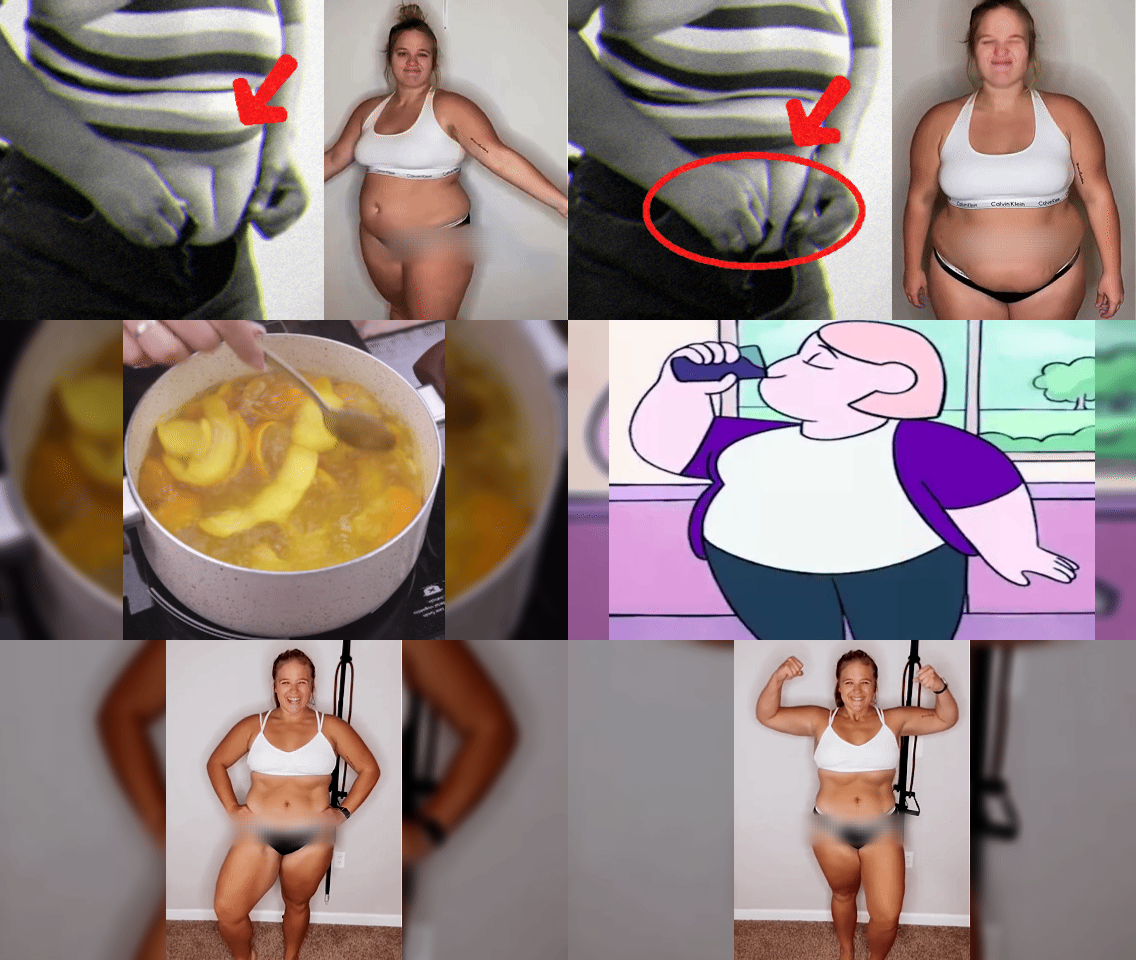
One of the testimonials featured is from a woman named Trudy, who reportedly lost 34 pounds, experienced fewer cravings, and got back some of the energy she had lost.
Another story describes a woman who reportedly dropped four clothing sizes and lost 42 pounds.
But perhaps the most interesting part isn’t the numbers.
It’s understanding why this mechanism is supposed to be different from all the diets and supplements these people had already tried.
The full explanation is laid out in a video that walks through the Nagano discovery, the story behind it, and how researchers say this mechanism works.
Access to the video may change or disappear at any time, so if you want to understand why so many people are paying attention to this unusual Japanese discovery, click below and watch it while it’s still available.
Copyright © 2024 Health Pro News LLC – All Rights Reserved
This site and the products and services offered on this site are not associated, affiliated, endorsed, or sponsored by Clickbank, nor have they been reviewed, tested, or certified by Clickbank.